
Key Facts:
- What: Hypertrophic cardiomyopathy (HCM) is caused by a change in the genes that build the heart’s muscle. The muscle grows too thick and the heart has to work harder.
- Where: Stamford Health’s Exercise and Sports Cardiology Department offers the latest treatment for this disease.
- Bottom line: Share your family history with your healthcare provider and ask whether cardiac testing is right for you.
By Mustafa Husaini, MD
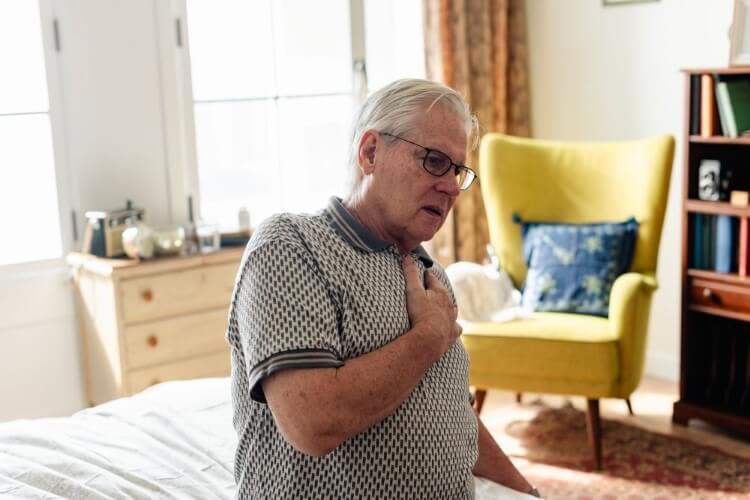
If you get short of breath climbing a flight of stairs, don’t assume it’s just your age or fitness level. It is worth talking with your physician or advanced care clinician about hypertrophic cardiomyopathy (HCM), a hereditary heart condition that can cause chest pain, breathlessness, and arrhythmias that, in rare cases, lead to a life-threatening cardiac arrest.
Some physicians used to tell patients with HCM to avoid intense exercise. For years, the guidelines themselves recommended restricting it, out of concern that vigorous activity could trigger a dangerous heart rhythm. More recent data has changed that picture. We now know that exercise in HCM can be safe when it is done in concert with an HCM cardiologist who evaluates each patient and guides what is right for them. That shift is what led me to write a recently published review article suggesting that a new class of medication, combined with structured exercise and regular VO2 max testing, can help patients with HCM become more active with fewer symptoms.
What is hypertrophic cardiomyopathy?
HCM comes from a change in the genes that build the heart’s muscle proteins. The muscle contracts too forcefully and grows thicker than it should. Over time, that overwork can lead to scarring in the heart muscle, much like repeated strain on any muscle. The thicker, stiffer walls make it harder for the heart to relax, fill, and move blood the way it should.An estimated 1 in 500 people are diagnosed with HCM, and it is likely more common than that, since many people carry the genetic change without a formal diagnosis. It is most often found in middle age. But because a person is born with it, younger people, including teenagers, can show symptoms too.
As Director of Exercise and Sports Cardiology at Stamford Health, I often see patients who don’t realize HCM is affecting them. They have slowly adapted their lives around symptoms that are easy to explain away by age, lack of fitness or motivation, or a busy stretch of life.
Much like high blood pressure, HCM can be quiet. The heart is normally a fine-tuned machine, and the thickened walls throw it off. People with HCM often feel breathless or uncomfortable when they exert themselves. So instead of going for a run or signing up for a bootcamp, they drift toward gentler activity like yoga or walking without ever knowing why.
Symptoms and diagnosis of hypertrophic cardiomyopathy
HCM can be hard to pin down because its symptoms look like a lot of other conditions. Chest pain, palpitations, and breathlessness are all common, especially during exercise. Some patients also feel dizzy or lightheaded.To properly evaluate HCM, your physician will take a thorough family history and perform diagnostic testing such as an electrocardiogram and a heart ultrasound to see how the heart is working. One thing we look for is outflow obstruction, where blood has a hard time leaving the heart’s main pumping chamber. This is not a blocked artery, which is what most people picture. It is the thickened muscle itself getting in the way of blood as it tries to leave the heart.
How Stamford Health treats hypertrophic cardiomyopathy, not just the symptoms
HCM is a genetic condition that does not go away; thus, there is no way to “cure it.” There are exciting developments over the past few years, however, that treat the disease itself rather than the symptoms. This enables patients to live without discomfort, and even exercise, if they want to.Treatment today is far better than it used to be. We used to rely on traditional cardiac medications like beta blockers and calcium channel blockers. These are not specific to HCM and treat the symptoms, not the disease. We now have cardiac myosin inhibitors (CMIs), a class of medication designed specifically for HCM that targets the root cause of the condition. They have been available since 2022, and some patients in the original studies have now been on them for close to a decade.
When we put patients on CMIs, on average, they feel so much better, and their test results reflect it. We also see the heart muscle remodel in a good way. The walls get thinner and the heart works more efficiently. There is hope that the scarring may improve as well, though we do not have the evidence to say that yet.
It is one thing for patients to say they feel better. It is another to prove it. One of the best tools for tracking real improvement is a cardiopulmonary exercise test (CPET). During a CPET, a patient walks or runs on a treadmill, or rides a stationary bike, with electrodes on the chest and a mask over the nose and mouth. The test measures how the heart and lungs perform together under stress and captures the patient’s VO2 max, the maximum amount of oxygen the body can use during exercise. It can also reveal the opposite situation, where a patient has quietly scaled back their life so much that they no longer notice how limited they have become, and the test shows they are more symptomatic than they let on.
VO2 max is an objective number. By establishing a baseline at the start of treatment and repeating the CPET over time, we can see whether a patient is truly getting better, not just whether they say they feel better. That number guides how we adjust medication and how hard we push a structured exercise plan built around what is safe for them. That combination is the shift in how we care for HCM.
After a proper evaluation with an HCM specialist, many patients with HCM can exercise, and the latest guidelines support it. Light, moderate, and even vigorous exercise have not been linked to dangerous arrhythmias in recent studies, when patients are evaluated and followed by an experienced HCM physician.
For referring physicians, our program offers CPET with serial VO2 max testing, initiation and titration of cardiac myosin inhibitors, and individualized exercise prescription. If you have a patient with known or suspected HCM, we are glad to partner on their evaluation and care.
My hope is to continue growing the program at Stamford Health, to find patients with HCM, and to help them improve their quality of life through safe, proven methods. As our HCM team grows, we are working toward a dedicated, multidisciplinary program for these patients.
To find out more about hypertrophic cardiomyopathy treatment, call the Exercise and Sports Cardiology Department at 203.276.2602.
Featured Expert/ Author