
Guest blog by Megan Carrier and Maelina Frattaroli, Stamford Health
Inspired by content from the Berkeley Well-Being Institute. Republished with permission.
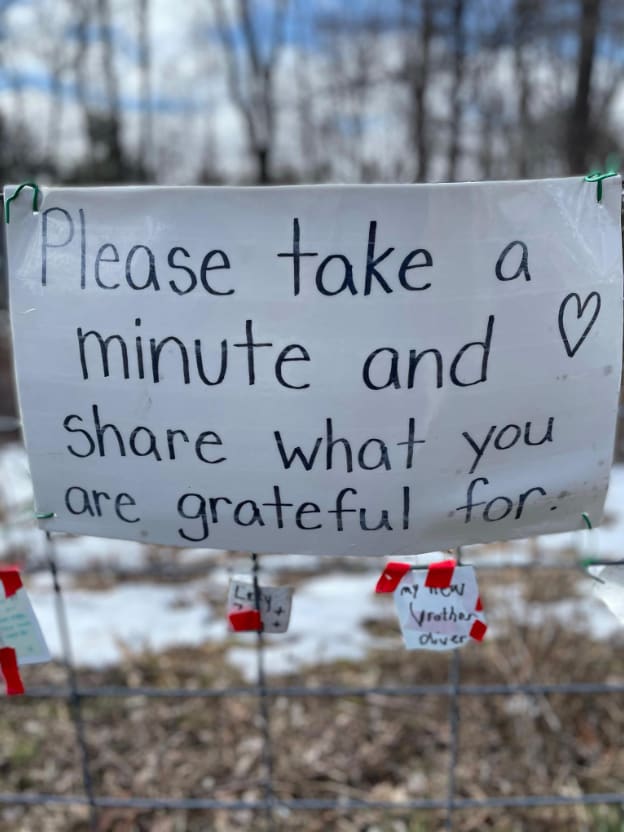
Hundreds of messages of gratitude on tape, post-it notes and paper have been left at Irwin Park in New Canaan attached to the fence near the gazebo. The colorful epistles among posters urging park visitors to, “share your gratitude here,” are on a fence that was erected for the goats during the warmer months at the park at 848 Weed Street.
A note left on the fence in large letters invites people to participate in the ‘Gratitude Project’ and urges people to share. “The intent of this display is for people to come together in unity, made aware of our blessings; particularly in this year of hardship and challenge,” a smaller print note says.
The inspiring tribute, originally established in 2020 as a way to spread warmth, joy, and connectedness during times of hardship, still stands today in 2021 reminding us of the benefits of gratitude and community.
Robert Emmons suggests that gratitude has two key components.
So how might we increase our gratitude? Here are some practices to try.
Need some ideas? Ask yourself:
Inspired by content from the Berkeley Well-Being Institute. Republished with permission.
Hundreds of messages of gratitude on tape, post-it notes and paper have been left at Irwin Park in New Canaan attached to the fence near the gazebo. The colorful epistles among posters urging park visitors to, “share your gratitude here,” are on a fence that was erected for the goats during the warmer months at the park at 848 Weed Street.
A note left on the fence in large letters invites people to participate in the ‘Gratitude Project’ and urges people to share. “The intent of this display is for people to come together in unity, made aware of our blessings; particularly in this year of hardship and challenge,” a smaller print note says.
The inspiring tribute, originally established in 2020 as a way to spread warmth, joy, and connectedness during times of hardship, still stands today in 2021 reminding us of the benefits of gratitude and community.
Robert Emmons suggests that gratitude has two key components.
- First, it’s an affirmation that there are good things in the world.
- Second, it's a recognition that this goodness comes from outside of ourselves. Gratitude leads us to appreciate things and connect to others, both of which are good for our well-being (take this well-being quiz to see how you're doing).
So how might we increase our gratitude? Here are some practices to try.
1. The gratitude journal
A gratitude journal is a notebook to keep track of the things that you're thankful for or to complete other gratitude practices in. You can write about the things you are grateful for each day or create a long list. You could also use your journal for drawing and other things that help you focus on what you are grateful for. The research suggests that gratitude journaling is an effective tool for increasing well-being.Need some ideas? Ask yourself:
- Are there any positive things that have occurred in your life?
- Are there any people you are happy to have in your life?
- What music are you thankful for?
- What foods are you most thankful for?
2. Practice gratitude for different things
Sometimes when we're not feeling so good, it can be hard to bring to mind things to be grateful for. Here are some ideas for different life domains.- People to be grateful for: family, friends, neighbors, teachers, cashiers, colleagues, and mechanics.
- Things to be grateful for: a roof over our heads, flowers, pets, favorite foods, and other important items.
- Places to be grateful for: warm sandy beaches, snowy mountains, nature, your favorite coffee shop, and your other favorite spots.
- Experiences to be grateful for: walking a nature trail, zip-lining, giggling with friends, social events, family reunions, and other favorite events.