
By Jamil O. Alexis, MD
While Benjamin Franklin’s famous quote “By failing to prepare, you are preparing to fail,” may not have been about colonoscopy prep, it definitely applies. What you eat in the days and nights before a colonoscopy are crucial for screening for colorectal cancer, the second deadliest cancer in the United States. However, the idea of the prep, an entire day of just liquids, has a lot of patients nervous about scheduling this important procedure.
It’s that first part of the colonoscopy experience that has most of my patients feeling uneasy. As a gastroenterologist with Stamford Health Medical Group, I’m no stranger to all questions about “poop.” While a lot of my patients aren’t comfortable discussing their bowel movements, I’m generally in the “more details, the better” camp (but, no, pictures aren’t typically necessary, thank you very much).
To help ease the strain (pun intended) and any possible embarrassment, keep reading frequently asked questions and answers about colonoscopy prep.
In the end, though, it’s all about what you can tolerate and what gets you clean.
I suggest starting a low-fiber diet five days before your procedure. Think foods like white rice, refined wheat flour products, and dairy products, which help the poop clump together so it’s easier to wash out.
Avoid whole grains, raw vegetables, and fruits, which are not digested by the body and may latch on to flat polyps and hide them during the colonoscopy. It’s also best to skip anything that might stick to the sides of the colon like nuts, seeds, and quinoa (the worst food to consume before a colonoscopy, in my opinion).
The major thing to watch out for is the color of whatever you consume. Stay away from reds and pinks as those dyes mimic blood and hide away other abnormalities. Otherwise, yellow, green, and blue hues are OK.
Don’t be shy about contacting your provider’s office before the procedure either. There are a few ways to salvage a not-great prep, including moving things around so you can go later in the day. After all, no one wants to wake up from a colonoscopy and find out the prep was bad and you must do it all over again.
While Benjamin Franklin’s famous quote “By failing to prepare, you are preparing to fail,” may not have been about colonoscopy prep, it definitely applies. What you eat in the days and nights before a colonoscopy are crucial for screening for colorectal cancer, the second deadliest cancer in the United States. However, the idea of the prep, an entire day of just liquids, has a lot of patients nervous about scheduling this important procedure.
Who needs a colonoscopy?
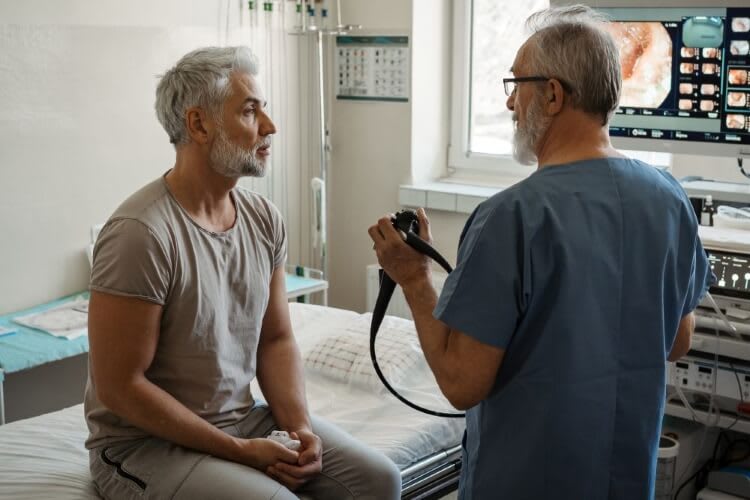
Colorectal cancer screening typically begins at 45 years old, although those of higher risk may start at an earlier age. Colonoscopy, which involves inserting a flexible tube with a camera into the large intestine to look for abnormalities, polyps, and inflammation, is a highly effective way to screen for colorectal cancer and lower an individual risk of cancer through polyp detection and removal. To obtain the most accurate and clear images, the contents of the intestine (stool) need to be removed (excreted) as much as possible ahead of time.It’s that first part of the colonoscopy experience that has most of my patients feeling uneasy. As a gastroenterologist with Stamford Health Medical Group, I’m no stranger to all questions about “poop.” While a lot of my patients aren’t comfortable discussing their bowel movements, I’m generally in the “more details, the better” camp (but, no, pictures aren’t typically necessary, thank you very much).
To help ease the strain (pun intended) and any possible embarrassment, keep reading frequently asked questions and answers about colonoscopy prep.
What’s the best prep?
The best prep is the one that works for you. Some people respond better to the high-volume preps (like GoLYTELY) while others are more comfortable with low-volume options such as SuPrep. Both are liquid solutions. While we wait for that magic pill option, the tablet version available now requires taking 24 pills, which may be difficult for the stomach.In the end, though, it’s all about what you can tolerate and what gets you clean.
Is it really that bad?
Personally, I think word of mouth has made the idea of prep worse than the reality of it. A lot of my patients are surprised at how not bad it is. That said, there are a few things that can make the clean-out more comfortable.I suggest starting a low-fiber diet five days before your procedure. Think foods like white rice, refined wheat flour products, and dairy products, which help the poop clump together so it’s easier to wash out.
Avoid whole grains, raw vegetables, and fruits, which are not digested by the body and may latch on to flat polyps and hide them during the colonoscopy. It’s also best to skip anything that might stick to the sides of the colon like nuts, seeds, and quinoa (the worst food to consume before a colonoscopy, in my opinion).
Does a clear liquid diet mean I can only have water?
As you take your prep, you’ll also have to stick to a clear liquid diet. While water is included, you’re not limited to colorless liquids. You can also have Jell-O, clear broths, and popsicles to eat; and apple juice, ginger ale, sports drinks, and black coffee to drink.The major thing to watch out for is the color of whatever you consume. Stay away from reds and pinks as those dyes mimic blood and hide away other abnormalities. Otherwise, yellow, green, and blue hues are OK.
Will my poop really become clear by the end?
That’s the goal! The prep is designed to remove all the waste from your intestine so that the camera can see as clearly as possible for the examination. There should not be any residue or solid pieces, especially if they’re brown. The best way for you to know that your prep worked is to have clear-as-pee poops at the end. The better you prep, the better your chances for the most successful exam possible.What if my prep isn’t good?
Whether you receive your colonoscopy prep instructions with every detail spelled out or you have just the basics, always develop a back-up plan with your provider in case the standard prep doesn’t move things along the way it should.Don’t be shy about contacting your provider’s office before the procedure either. There are a few ways to salvage a not-great prep, including moving things around so you can go later in the day. After all, no one wants to wake up from a colonoscopy and find out the prep was bad and you must do it all over again.
Featured Expert/ Author
)