

What Is Thoracic Outlet Syndrome?
For those experiencing unexplained numbness, tingling, or pain in their shoulders and neck, finding the cause can be a long, winding road. Thoracic outlet syndrome (TOS) is a group of rare conditions that affects just 1 in 100,000 people, but it can be treated effectively under the expert and compassionate care of Stamford Health’s highly trained physicians.The thoracic outlet is the area between your collarbone and first rib. It contains arteries, blood vessels, nerves, and muscles that go from your neck down your arm. If those nerves, blood vessels, or arteries are too cramped, they can become compressed. The symptoms depend on where the compression is, but they are all part of TOS.
Types & Symptoms Of Thoracic Outlet Syndrome
Each type of TOS has its own set of symptoms. To best determine which, if any, type you may have, consult one of Stamford Health’s thoracic surgery team members.
How Stamford Health Diagnoses Thoracic Outlet Syndrome
To identify TOS, your doctor may perform physical exams and diagnostic testing in addition to a complete medical history. The following diagnostic tests may be used to locate compression in the thoracic outlet.

-
Magnetic resonance imaging (MRI)
May be used to identify any compression in the area. -
Ultrasound
Can be utilized if a blood clot is suspected. -
Interscalene block
An in-office procedure to identify neurogenic TOS, the trickiest type to diagnose. A doctor injects a steroid or Botox into the scalene muscles, which go from the neck to the first rib, to see if the patient has relief.
Treatment Options For Thoracic Outlet Syndrome
Once the specific kind of TOS is identified, your surgeon will work with you to determine the most effective form of treatment. Physical therapy is generally recommended to strengthen the muscles around the thoracic outlet. With time, it helps relieve the pressure on the nerves or blood vessels and alleviate symptoms. Botox injections may also be prescribed for pain relief.
If symptoms persist, then surgery may be necessary. Stamford Health Thoracic Surgery Department is proud to offer the most cutting-edge, minimally invasive surgical options for patients with TOS.
In this procedure, specialized by Dr. Benjamin Medina, a small camera and robotic instruments are inserted into the chest via small incisions to remove the first rib and cut the muscles causing compression. Patients are required to stay overnight for monitoring but generally can go home after. Physical therapy is usually recommended for the weeks following surgery, but most patients will feel almost immediate relief.
Meet Dr. Benjamin Medina, Thoracic Surgeon
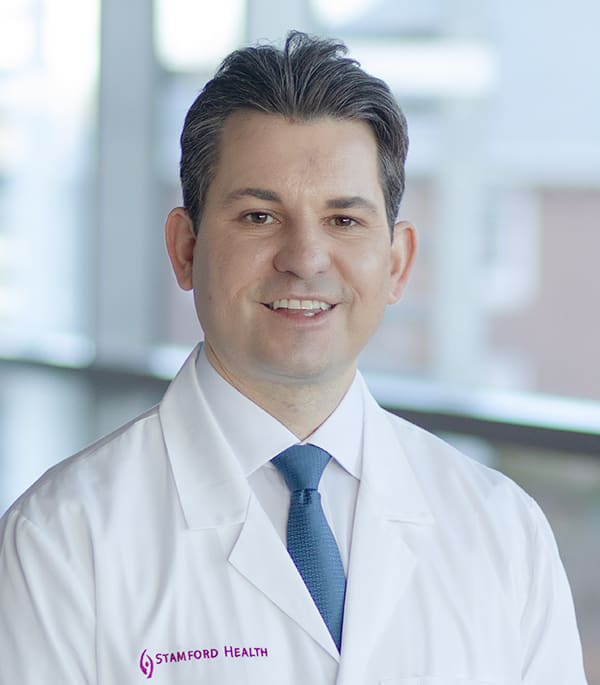
Dr. Medina performs procedures across the full spectrum of general thoracic surgery. He is an expert in the diagnosis and management of benign and malignant diseases of the lungs, esophagus, mediastinum, diaphragm, chest wall, and thoracic outlet, with a focus on minimally invasive and advanced surgical techniques.