

My BRCA-Positive Life: How One 20-Something Navigates Breast Cancer Prevention
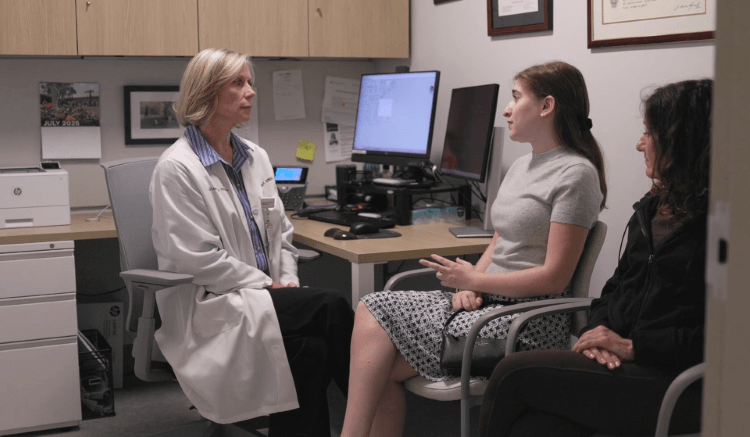
Rebecca has been aware of breast cancer for most of her life. When she was just 5 years old, both her mother, Marlene, and her aunt were diagnosed and underwent mastectomies as part of their treatment. Watching her mother navigate breast cancer would ultimately shape Rebecca's own approach to prevention.
“I didn’t know a ton about what was going on, but I knew enough,” she remembered. “I knew Mom was sick and that she was going to the hospital to get better.”
Marlene recovered for the next few years. But in 2013, when Rebecca was 13 years old and her younger sister, Sara, was 10, the cancer returned. This time, Marlene had stage 4 metastatic breast cancer and would require chemotherapy.
 “My parents were really, really good about making sure we felt comfortable to ask any questions that we needed to. But that didn’t make it any less scary,” she said. “My mom lives her life in the pursuit of fun and fulfillment. She makes everything look effortless. When the cancer came back, we saw her in pain and scared for the first time, and that was a reality check.”
Even though she and Sara were frightened, the family still made laughter a priority. “My dad has bad taste in hats, so when my mom lost her hair because of chemotherapy, she would wear his really fluffy ones in the winter as a joke,” Rebecca recalled. “Somehow my parents managed to make light of this terrible experience for my sister and me. So even though it was scary, we never felt alone when we were with our family.”
As they made it through the initial chemotherapy and Marlene settled in with her regular treatments, Rebecca started doing her own research. “My sister and I have been aware our whole lives that breast cancer was a possibility,” said Rebecca. With her grandmother, mother, and all her maternal aunts carrying the BRCA gene mutation, Rebecca and her sister viewed a diagnosis as a distinct possibility.
As Rebecca got older, that awareness started to shape decisions about her own health. Inspired by her mother's resilience, Rebecca wanted to be proactive. “When I was 16, I did a lot of research in study hall when I probably should have been doing homework,” she recounted.
One evening, she sat her parents down and told them that she wanted to be tested for the BRCA gene mutation. She wanted to be ready for what might lie ahead. However, her parents convinced her to push it for a few years. She was, after all, only in high school.
So in 2020 as the world shut down from the Covid-19 pandemic, a few of their older cousins on their mom’s side called to say they were getting tested for the BRCA gene mutation. Rebecca and Sara also decided that it was time that they found out. The sisters met with a genetic counselor and decided to undergo testing.
Sara was negative, but Rebecca was positive. “I just bawled my eyes out. This thing that was a possibility all of a sudden became a certainty,” she said.
Once she got over the initial shock, Rebecca put her type-A skills to use. “I’m a planner, so now that I have proof that I have it, what can I do about it?” she said.
Taking the Next Step
Rebecca joined Stamford Health’s High-Risk Breast Cancer Program, which is uniquely designed for patients with an increased chance of developing breast cancer. After an initial evaluation, each qualifying candidate receives a personalized, comprehensive care program including advanced screening options, support groups, genetic counseling, and advice on medical and lifestyle modifications.
 “Having this program of targeted prevention so close to my home and work has been a godsend for me. The fact that it’s also where my mom receives her care is also crucial,” she said. “I can freak out the night before, get screened in the morning, and then walk into work later knowing I’m good for the next six months.”
In addition to twice-yearly mammograms with ultrasound, Rebecca also has a breast MRI once a year and more frequent visits with her OB/GYN. “Lots of fun things that help me have a better peace of mind to sleep at night,” she said.
For her parents, the high-risk program means they have another part of their village that’s watching out for their children. “I'm very hopeful that she has this program at her fingertips,” Marlene says. “And that it will be there to help her get through this so she can live a very long and happy life. That’s my wish for her: That she is a healthy woman.”